Introduction
Mental health is becoming an increasing critical component of public health. According to the National Institute of Mental Health, more than one in five U.S. adults live with a mental illness [1]. Despite this, access to adequate mental health care systems remain underfunded, and people often found themselves lacking access to mental health care. The lack of mental health care access compounded with the rise of large language AI models led to many people seeking mental health support from these AI chatbots.
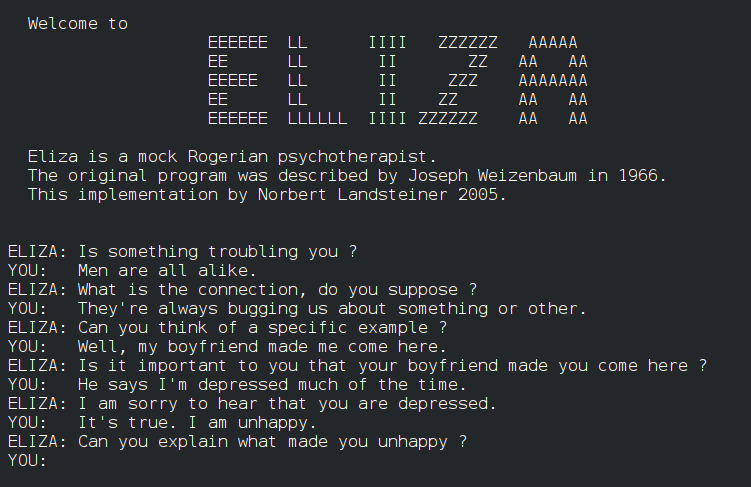
The use of chatbots in mental health support dates all the way back to the 1960s when Joseph Weizenbaum at MIT created a natural language processing program called ELIZA [2]. ELIZA works through pattern matching, scanning for keywords in the user’s input, and answering them based on predefined scripts. The most famous one is called “DOCTOR,” which is designed to simulate a Rogerian psychotherapist who encourages users to explore their feelings. The problem with ELIZA was that it could not provide any insightful responses. It could only look for keywords and patterns, and respond accordingly, creating a false illusion of understanding [3]. The ELIZA effect, named after this program, describes the tendency to project human traits, such as empathy, onto machines [4].
Decades later, advances in machine learning technologies gave rise to more sophisticated chatbots, like Woebot and Wyst, which make use of cognitive behavioral therapy techniques. From 2015 onwards, AI chatbots for mental health support have begun to enter the consumer market [5].

In 2022, OpenAI launched the LLM chatbot we all know and love: ChatGPT [6]. The COVID-19 pandemic accelerated its adoption for mental health support, as lockdowns, social isolation, and heightened anxiety created a mental health pandemic amidst the physical health one.
AI chatbots boast numerous advantages to their human therapist counterparts. They were available around the clock, could respond instantaneously, could handle large amounts of users simultaneously, and were above all, free and accessible to most. They were particularly attractive to people who face barriers to traditional mental health care, like people with financial burdens, or people who live in areas where professional therapists are scarce.
However, the risks of using AI as mental health support should not be ignored.